What is Perry?
Perry is pear cider's older, quieter cousin - an alcoholic drink made not from cooking or eating pears, but from a handful of small, sharp, often unglamorous perry pear varieties. It's been made in the orchards of the Welsh Marches - Herefordshire, Gloucestershire, and the border counties - for hundreds of years, quietly, without much fuss, by people who simply liked drinking it.
Older than champagne, and arguably its ancestor…
Champagne houses like to tell a story about a monk called Dom Pérignon discovering sparkling wine in the 1690s. It's a good story. It's also, by most modern accounts, not quite true, even within the wine trade itself. Dom Pérignon was, if anything, trying to stop his wine from fizzing, not start it.
Methode Champenoise
The technique now known as méthode champenoise - trapping a second fermentation inside the bottle to create natural bubbles - is now widely understood to have been pioneered decades earlier, in England, by cider and perry makers working with a new kind of tough, coal-fired glass bottle strong enough to survive the pressure. The scientist Christopher Merret described the method in a paper to the Royal Society in 1662, over thirty years before Champagne's own sparkling wines took off - and the orchard counties of the Marches, right where Cabalva sits, were at the centre of that world.
We're not making any grand claims to have invented anything ourselves. But it's a nice thing to know, next time someone assumes fine sparkling wine only comes from France, the bubbles may well have started here, in a pear orchard, in the Welsh Marches.
A craft kept alive by enthusiasts
For much of the twentieth century, perry nearly disappeared. The old orchards were grubbed up, the veteran trees left to brambles, and perry survived mostly as a curiosity - kept going by a small number of dedicated growers and drinkers who refused to let the old varieties and the old skills die out. It's still, in many ways, an enthusiast's drink: slow to make, awkward to scale, and easy to get wrong.
That's part of what we love about it. But we don't think it should stay a curiosity. Good perry - properly made, properly matured - is genuinely delicious: light, delicately sparkling, food-friendly, and easy to drink. Our aim at Cabalva isn't to keep perry as a niche interest for people who already know what it is. It's to make it approachable - a drink you'd happily serve at a wedding, a Sunday lunch, or any celebration, whether or not you've ever heard the word "perry" before.
How to serve
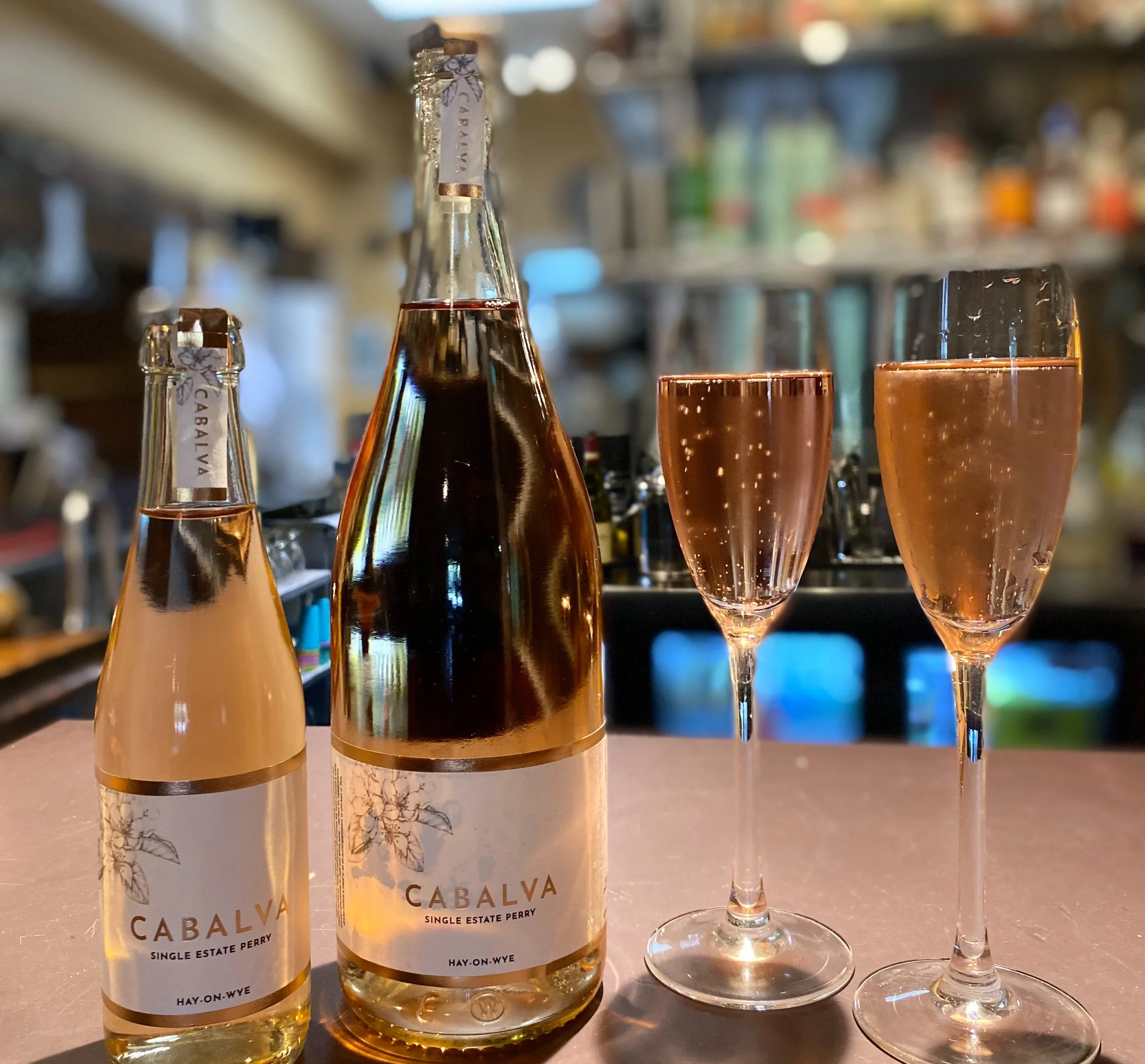
Serve Cabalva perry chilled, in a wine glass or champagne flute. Straight from the fridge or over ice on a warm day, is exactly right.